Key Takeaways
- A bank reconciliation statement explains why your bank balance and books differ.
- Timing items and missing book entries need different treatment.
- Reconcile the same period, then investigate items that stay open.
- An aged unresolved-items list helps stop old differences from being forgotten.
Your bank balance can look healthy while your books show a different number. A bank reconciliation statement helps you explain that gap before you use the figure for cash flow or reporting.
The goal is not to force 2 raw balances to look the same. It is to identify valid timing items, post verified entries to your books, and show that the adjusted balances agree.
What Is a Bank Reconciliation Statement?
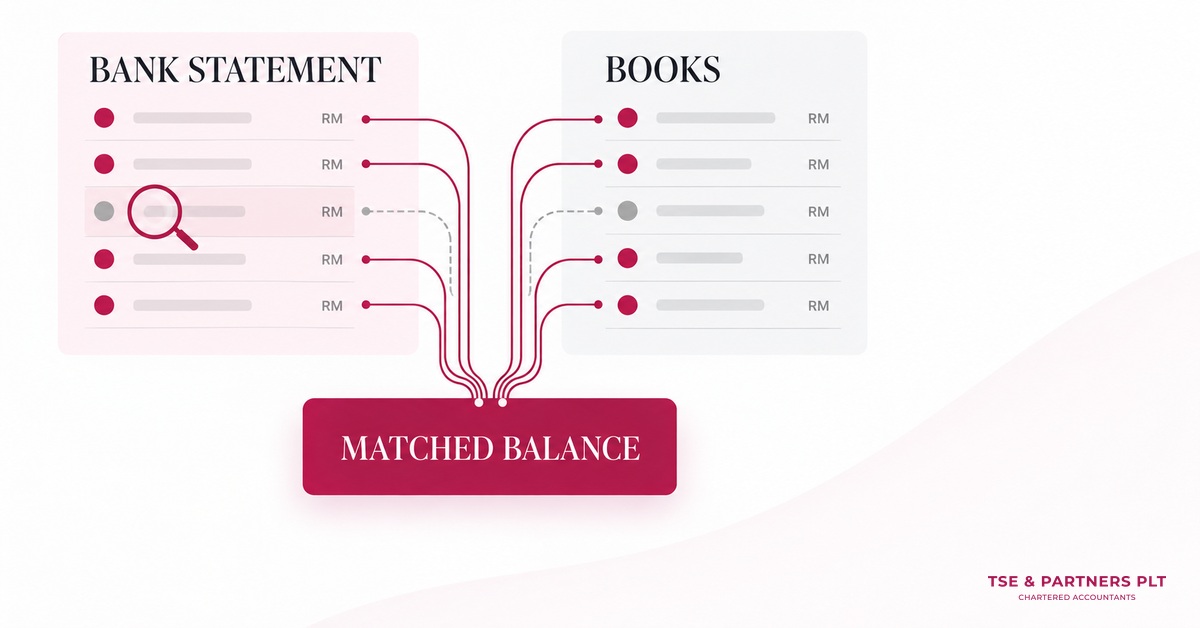
A bank reconciliation statement compares your bank statement with your cash or bank ledger for the same period. It lists timing differences and book adjustments, such as outstanding payments, deposits in transit, bank fees, and direct debits. The check is complete when the adjusted bank balance agrees with the adjusted book balance.
Why Bank and Book Balances Differ
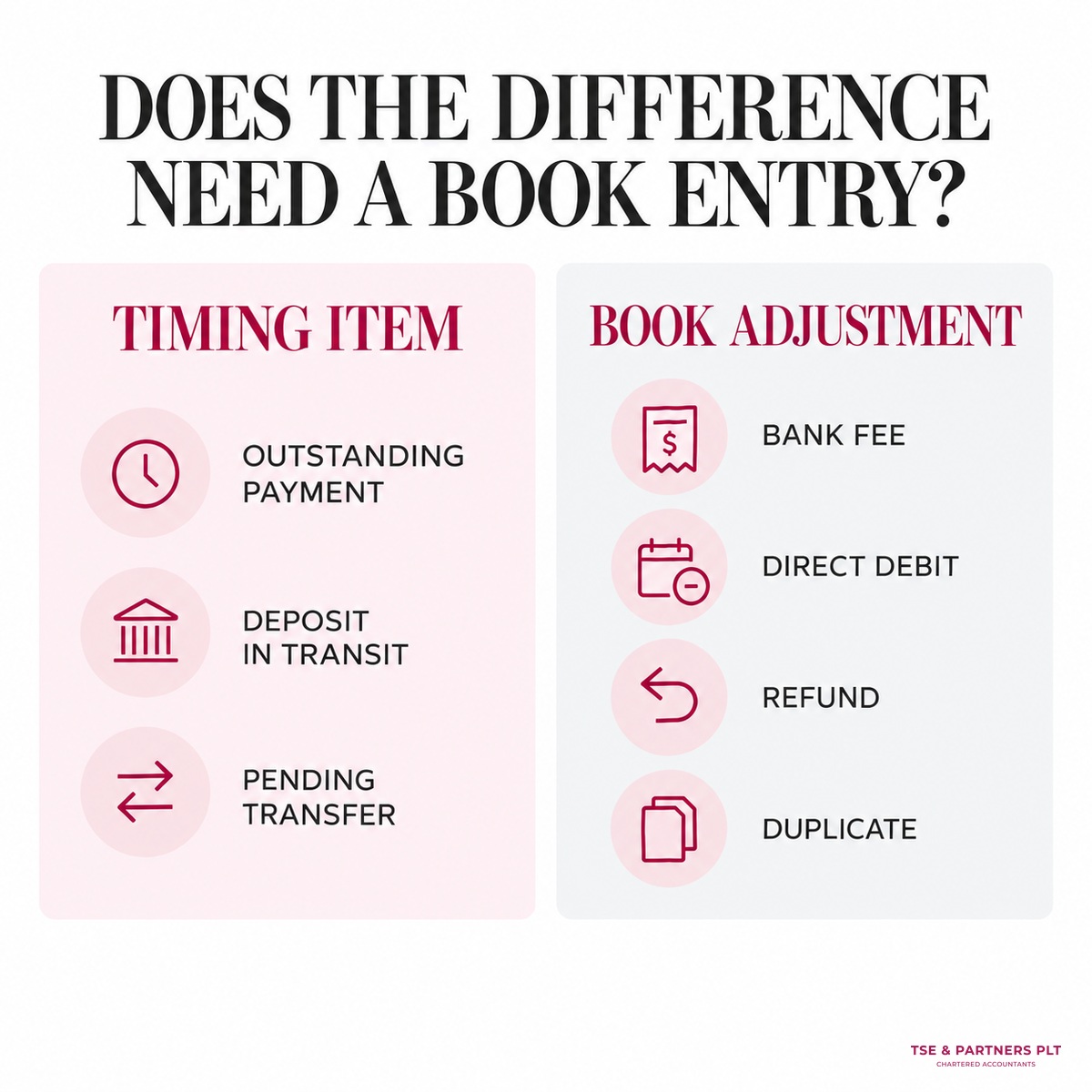
A difference does not always mean someone made a mistake. The bank and your books may record the same event on different dates.
Common timing items include:
A payment recorded in your books that has not cleared the bank.
A deposit recorded in your books that reaches the bank after month-end.
A transfer that appears on one side before the other account updates.
Other differences may need an entry in your books:
Bank fees or interest not yet recorded.
A direct debit that your finance team did not post.
A refund, reversal, or returned payment.
A duplicate or wrongly dated entry.
A card, FPX, DuitNow, or e-wallet settlement recorded at gross value while the bank receives a net amount after fees.
This last point matters for many Malaysian SMEs. Payment channels can create several records for one sale. Match the sale, fee, refund, and settlement as separate parts rather than searching for one identical number.
Records You Need Before Starting
Gather the full set before you begin:
The bank statement for the exact period.
Your cash or bank ledger for the same dates.
The previous reconciliation and its open items.
Sales invoices, supplier bills, receipts, and payment records.
Payment-gateway or marketplace settlement reports.
Transfer records between business bank accounts.
Notes for refunds, chargebacks, returned payments, and bank fees.
Use one account and one period at a time. If you run several accounts, prepare a separate reconciliation for each one.
A complete reconciliation file should also make the review easy to repeat. Record the account name, bank, currency, period, statement closing balance, ledger closing balance, preparer, reviewer, and review date. Give every reconciling item a short description and a reference to its supporting record.
Keep proof of what happened after the period ended. For example, an outstanding payment should later appear on the bank statement. A deposit in transit should later reach the account. If an item does not clear as expected, update the tracker rather than deleting it from the next reconciliation.
Use clear cut-off rules when statements and settlement reports end at different times. A card processor may close its business day before midnight, while your sales system records activity until the calendar day ends. Document the cut-off used so the same timing difference is not investigated again every month.
For transfers between business accounts, reconcile both accounts together. A transfer can appear as an unexplained receipt in one account and an unexplained payment in another if only one side is reviewed.
How to Reconcile the Account
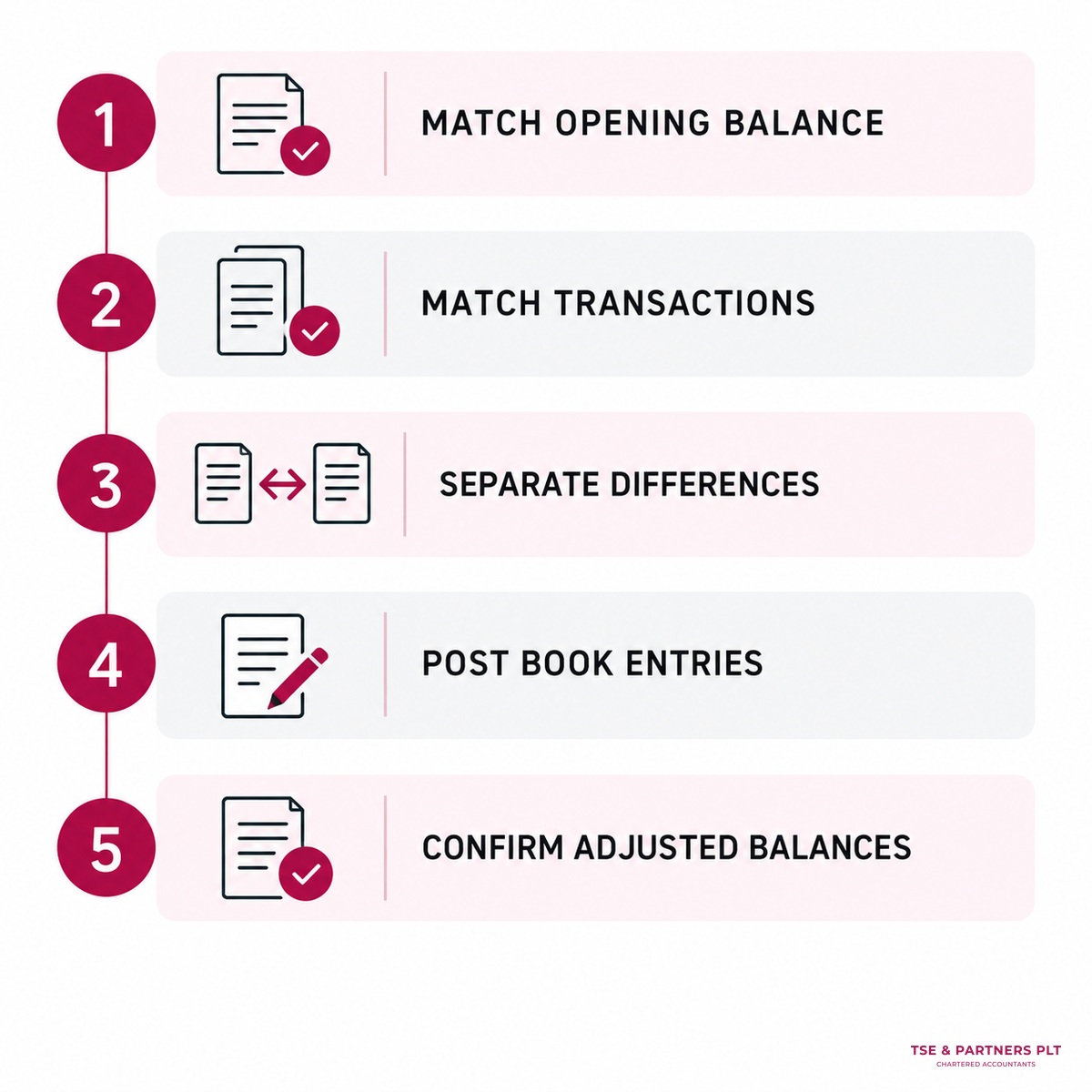
Match the opening balances
Start with the previous period's closing balance. If it does not match your current opening record, stop and find the reason first. Otherwise, an old issue may be carried into every new month.
Tick off common transactions
Match deposits and withdrawals by date, amount, reference, and payer or payee. Do not rely on amount alone. Several transactions can share the same value.
Separate timing from book entries
Put uncleared payments and deposits in transit on the bank side. Put bank fees, direct debits, interest, and verified missing entries on the book side.
Post verified book adjustments
Record only entries supported by the bank statement or another reliable document. Add a clear description and reference. Keep the supporting record with the reconciliation.
Confirm adjusted balances agree
Calculate both adjusted balances. If they still differ, review dates, duplicates, reversals, opening balances, and gross versus net settlements.
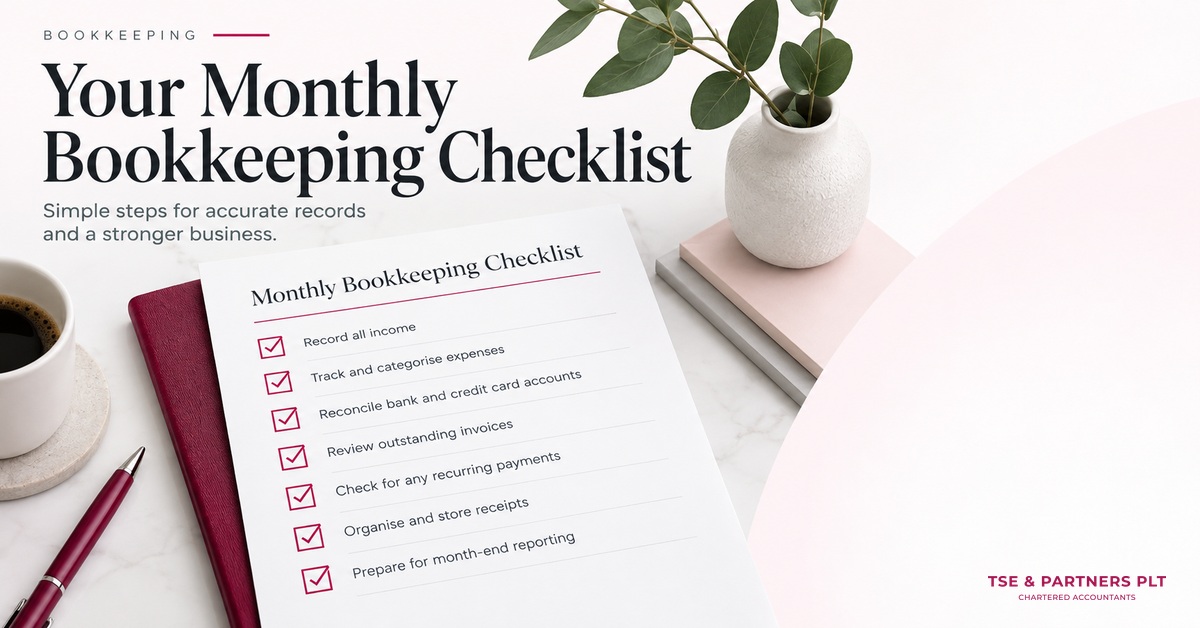
A monthly check is a practical starting point for many SMEs. A higher-volume business may need more frequent checks. The right cadence depends on transaction volume, payment channels, and how quickly management needs reliable figures. A broader bookkeeping checklist can help you place reconciliation inside the month-end routine.
Use an Example to Investigate Differences
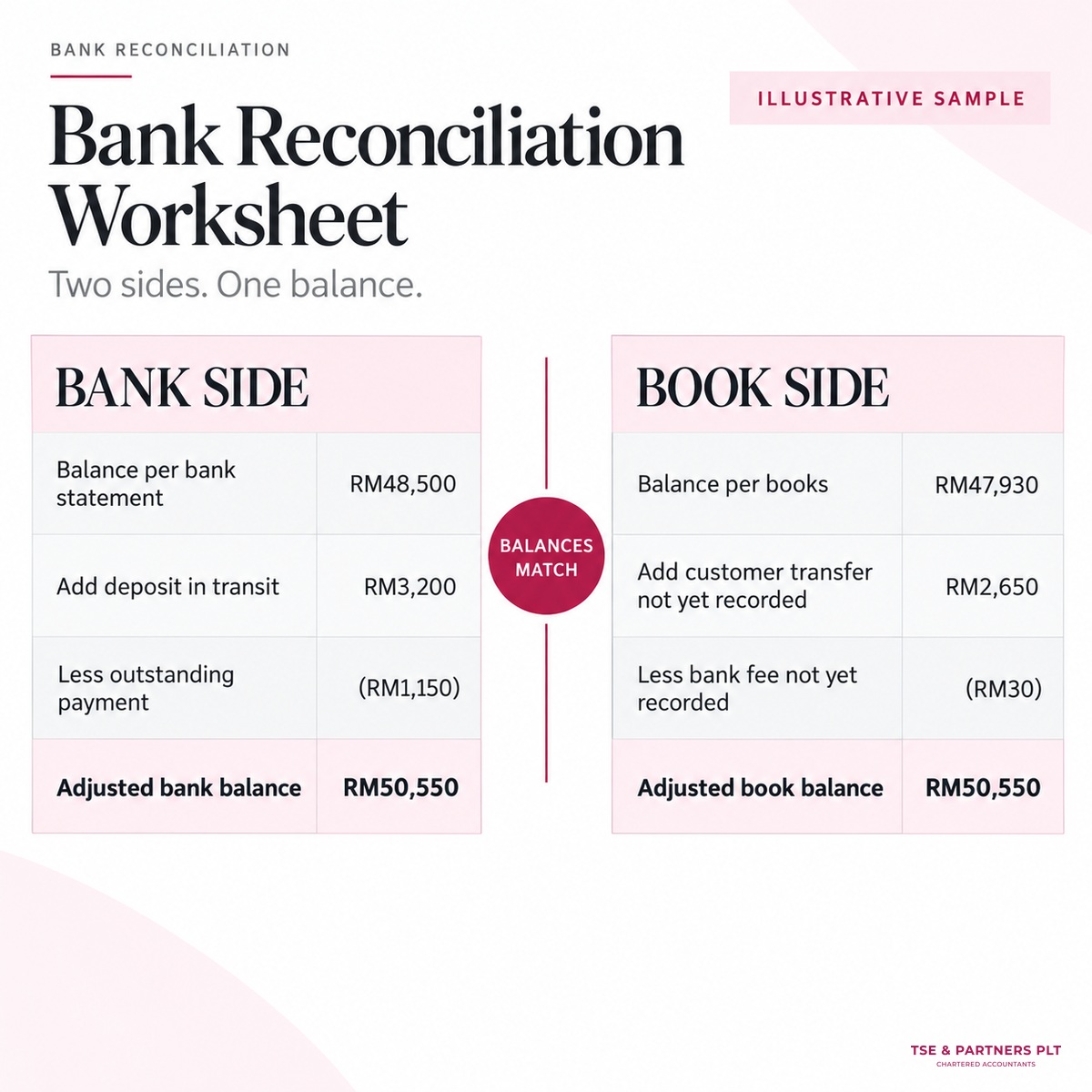
The figures below are illustrative. They are not client data.
| Bank side | RM | Book side | RM |
|---|---|---|---|
| Balance per bank statement | 48,500 | Balance per books | 47,930 |
| Add deposit in transit | 3,200 | Add customer transfer not yet recorded | 2,650 |
| Less outstanding payment | (1,150) | Less bank fee not yet recorded | (30) |
| Adjusted bank balance | 50,550 | Adjusted book balance | 50,550 |
The bank-side items are timing differences. The business already recorded the RM3,200 deposit and RM1,150 payment, but the bank had not processed them by the statement date. They stay on the reconciliation until they clear.
The book-side items need supported entries. The bank received a RM2,650 customer transfer that was not yet in the ledger and charged a RM30 fee. After those 2 entries are recorded, both adjusted balances equal RM50,550.
Do not copy these figures into your own records. Use the same structure with your real statement, ledger, dates, references, and supporting documents. A reliable working paper should also show the account name, period, preparer, reviewer, review date, each open item, and its later clearance date.
Investigate Differences in the Right Order
When balances do not match, use this order:
Check the period and opening balance.
Check transaction dates and bank references.
Check whether sales were recorded gross but settled net of fees.
Check duplicate entries and reversals.
Check transfers between business accounts.
Check prior-period outstanding items.
Check whether a book adjustment was posted twice or not at all.
Do not assume fraud from one mismatch. If you see an unauthorised transaction, contact the bank and follow your internal escalation process promptly.
A Malaysian online discussion about accounting software shows that business users care about reconciliation features. Software can speed up matching, but a person still needs to review unusual items and confirm the accounting treatment.
Track Unresolved Items by Age
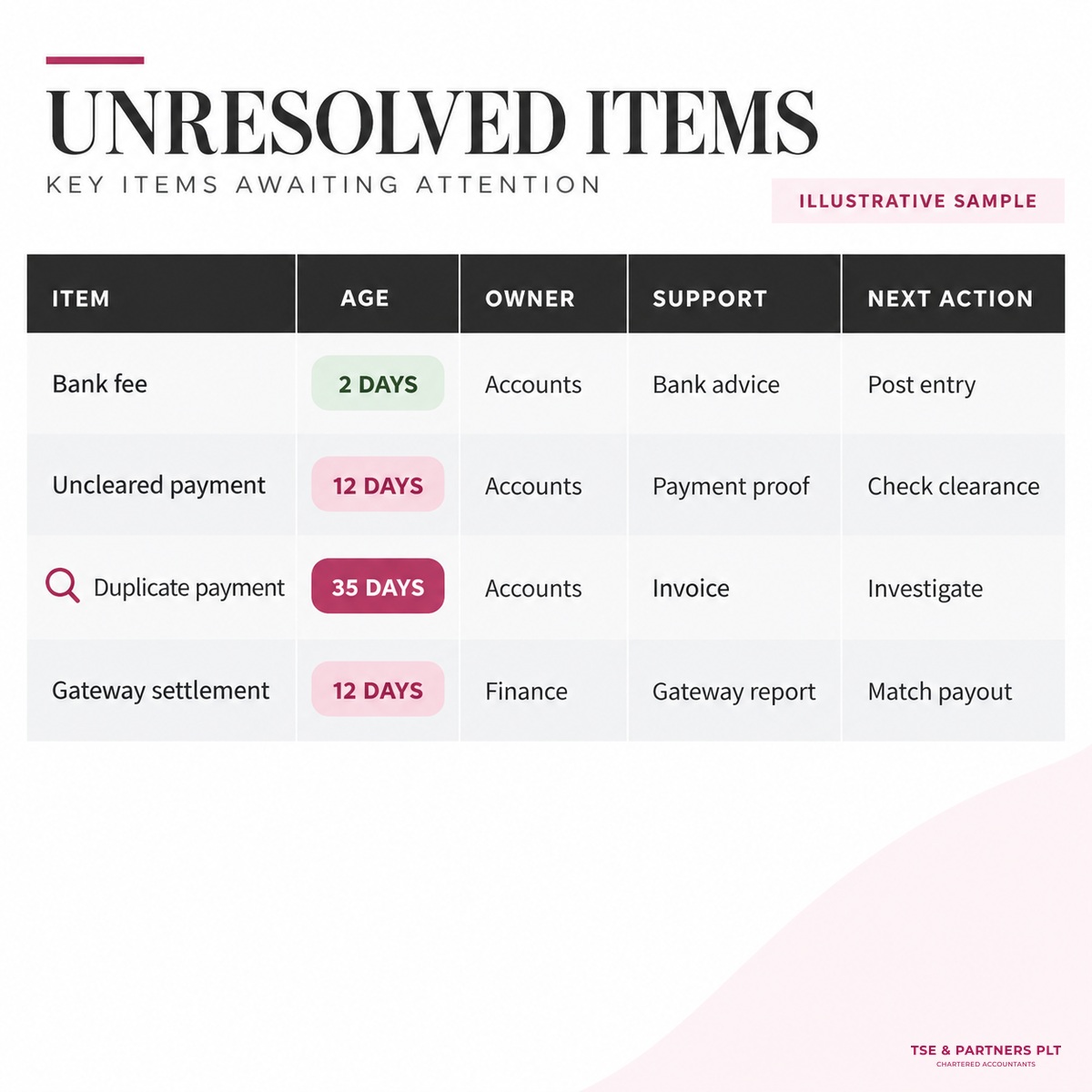
Do not let open items disappear into next month's file. Keep a short tracker with:
| Field | What to record |
|---|---|
| Item | Clear description and amount |
| First seen | Reconciliation period |
| Owner | Person responsible for checking |
| Support | Invoice, receipt, bank advice, or report |
| Expected date | When it should clear or be corrected |
| Next action | Follow-up or escalation |
An old outstanding payment may have been cancelled, replaced, or recorded wrongly. A deposit that stays in transit for too long may point to a settlement issue. Age is a signal to investigate, not proof of an error.
Clean reconciliations also support better management accounts because the cash figure has a clear trail. They help when preparing unaudited financial statements in Malaysia, although a reconciliation does not make statements audited.
When Outside Support May Help
Consider outside support when you have several bank accounts, many payment channels, catch-up records, repeated old items, or no clear owner for month-end work.
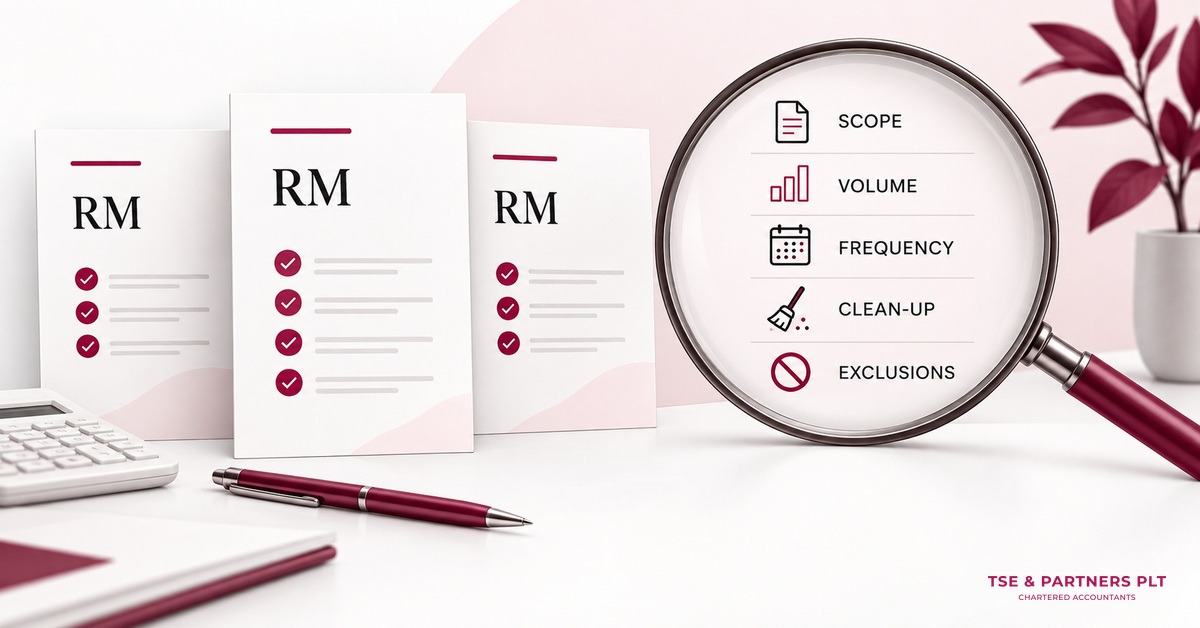
TSE & Partners supports accounting and bookkeeping services in Kuala Lumpur through associates. The scope may include recurring bookkeeping, accounting record setup, financial statement compilation, consolidation, and related SST work through associates. Audit and assurance are outside this scope.
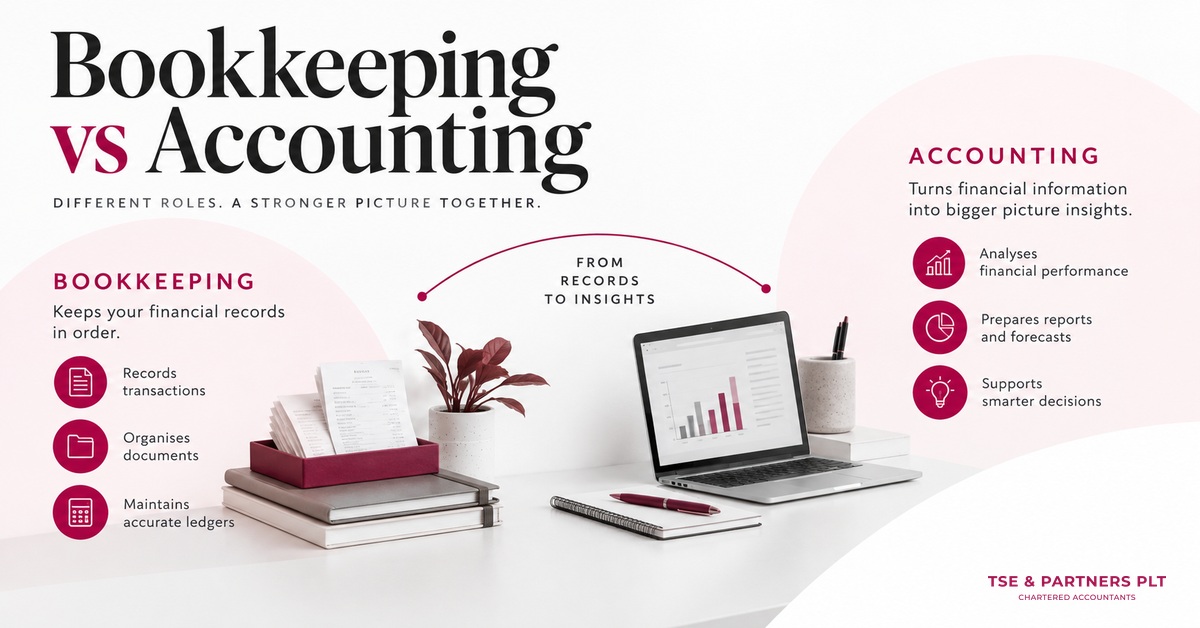
Before comparing providers, review how accounting service fees in Malaysia are linked to transaction volume, record quality, and reporting needs. It also helps to understand bookkeeping versus accounting so the right person owns each step.
Bank Reconciliation Questions SMEs Ask
How often should a business reconcile?
Monthly is a practical baseline for many SMEs. Higher transaction volume or several payment channels may justify weekly or more frequent checks. Choose a cadence that keeps unresolved items manageable.
Which entries adjust the bank side?
Typical bank-side items include outstanding payments and deposits in transit. These are usually already in your books but have not yet appeared in the bank record.
Which entries adjust the book side?
Bank fees, direct debits, interest, refunds, and other bank-recorded items may need entries in your books after you verify them.
What if the balances still do not match?
Recheck the period, opening balance, dates, references, gross and net settlement values, duplicates, reversals, transfers, and prior-period items. Do not close the reconciliation with an unexplained plug figure.
Can accounting software do it automatically?
Software can import transactions and suggest matches. It cannot remove the need to review unusual items, confirm supporting documents, and decide how a difference should be recorded.
Data Sources and References
Xero Malaysia bank reconciliation guide
QuickBooks Malaysia bank reconciliation guide
Accounting.my bank reconciliation statement guide
Alliance Bank Malaysia SME bookkeeping guide
Sage deposits-in-transit guide
NetSuite bank reconciliation guide
BILL bank reconciliation statement guide
The information in this article is general guidance only. It does not constitute accounting, tax, financial or legal advice and may not fit your circumstances. Confirm the engagement scope and seek qualified advice before acting.