Key Takeaways
- A useful management account sample combines results, comparisons, explanations, and actions.
- The pack should answer a business question instead of presenting every available number.
- Illustrative figures must be labelled clearly and real reports must use supported records.
- Management accounts are internal reports. They do not provide an audit opinion or assurance.
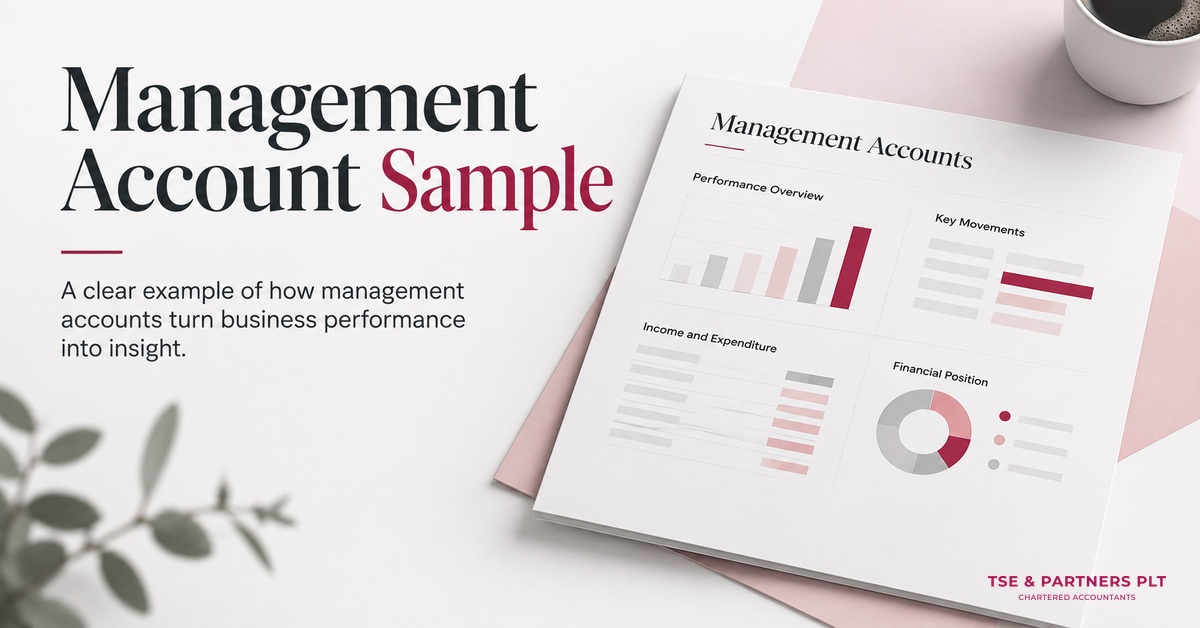
A management account sample should do more than show profit and loss. It should help an SME owner see what changed, why it changed, what cash is available, and which action needs an owner.
The exact pack depends on the business. A service company may focus on revenue, margin, cash, receivables, and staff costs. A retailer may also need stock, outlet, channel, and product information.
What Should a Management Account Sample Include?
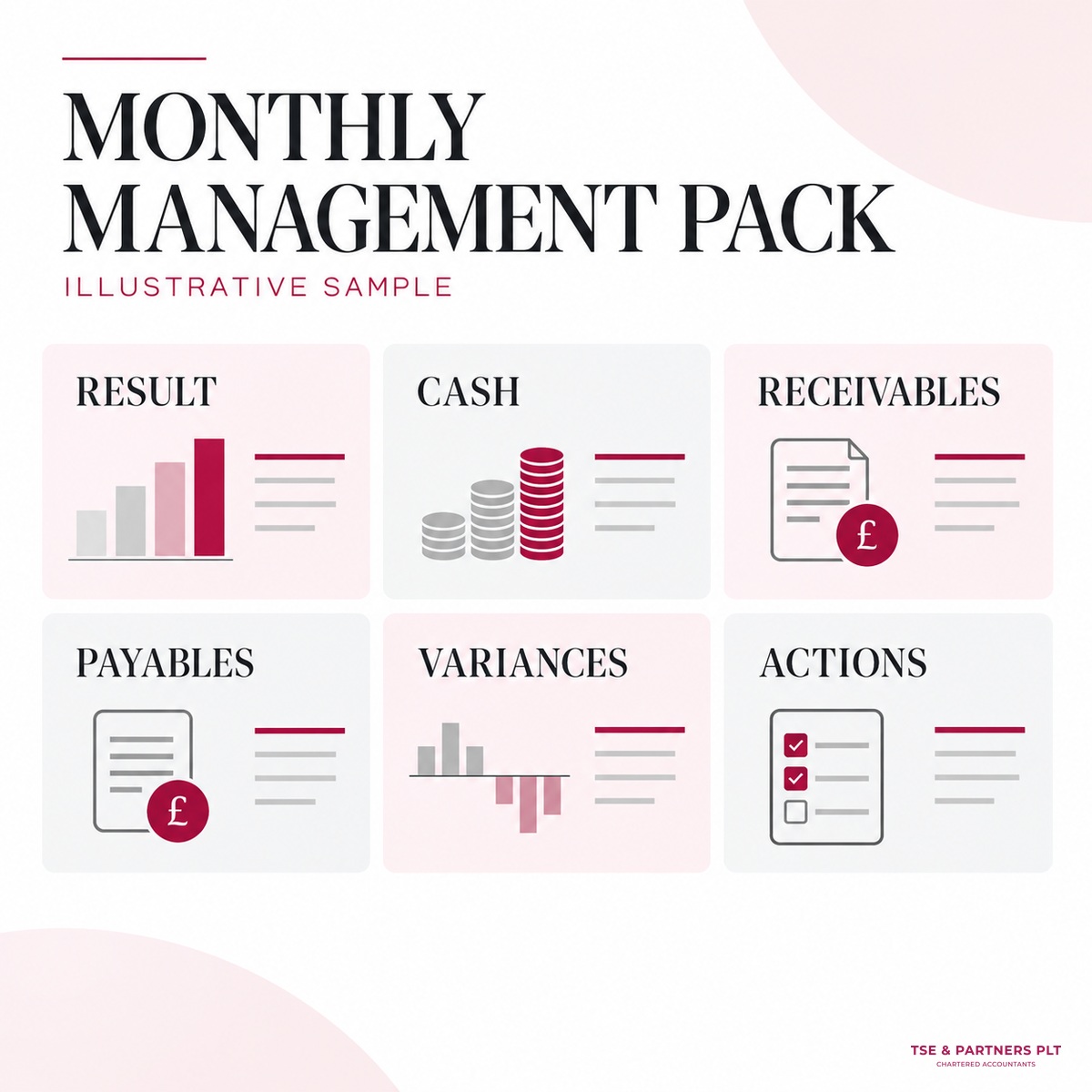
A practical management account sample normally includes a profit and loss view, financial-position highlights, cash movement, comparisons with budget or a prior period, and short variance commentary. It should also record decisions, owners, and due dates. The best format is not the longest one. It is the one that helps management act on reliable information.
A concise pack may contain:
Reporting period and preparation date.
Headline result for the month and year to date.
Revenue, direct costs, gross profit, operating costs, and operating result.
Cash movement and closing cash position.
Key customer, supplier, stock, debt, or intercompany balances where relevant.
Actual-versus-budget and current-versus-prior comparisons.
Commentary on material changes.
An action log for unresolved items and decisions.
Start With One Clear Reporting Question
Begin with the decision, not the template. Ask what management needs to know this month. Examples include whether the business can meet expected payments, why gross margin changed, which customers are overdue, which cost moved beyond plan, or which intercompany balances remain unresolved.
The figures must come from records that are complete enough for the purpose. If bank balances are not reconciled, the cash section may mislead the reader. Use a bank reconciliation statement before relying on the reported cash position.
Review This Illustrative Monthly Sample
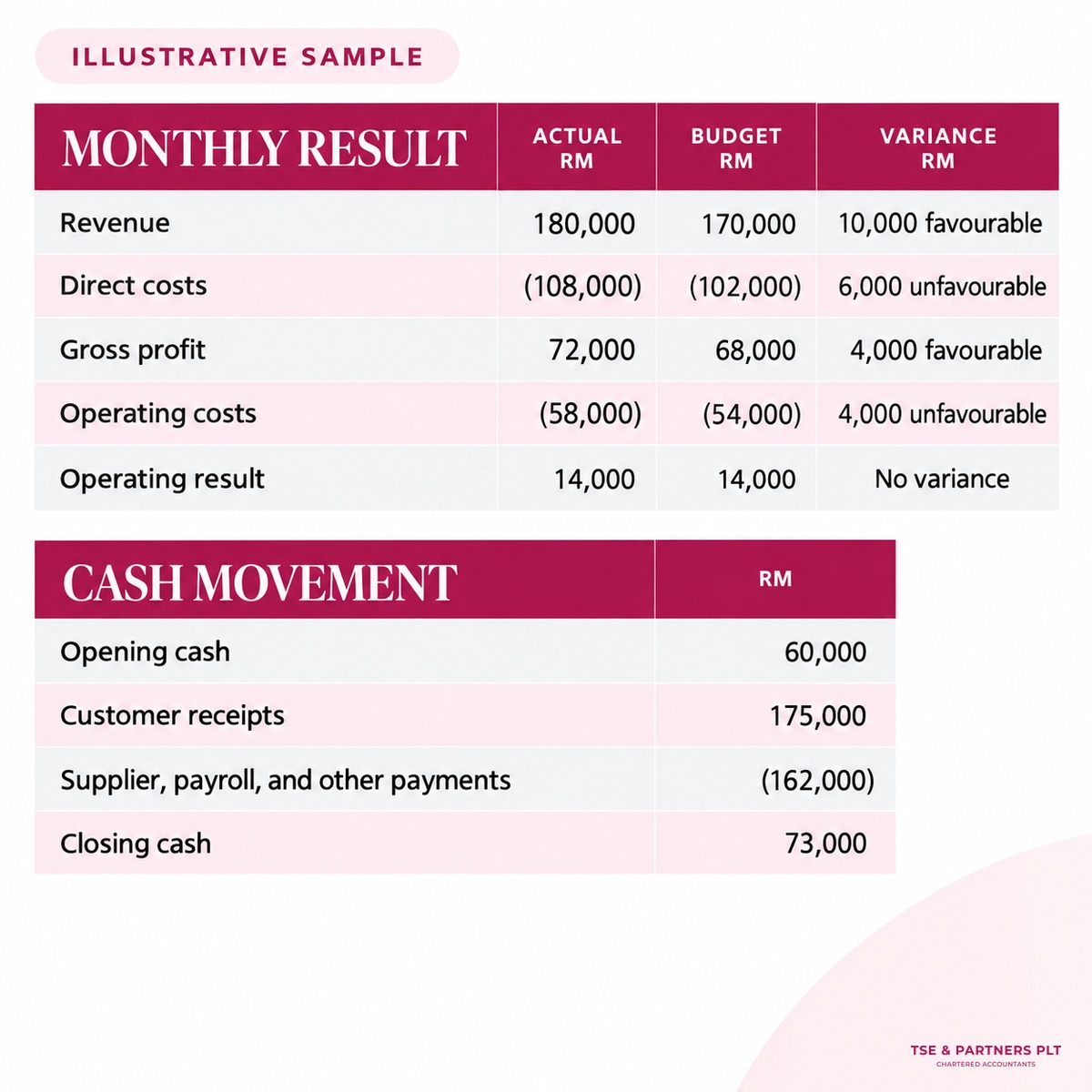
The figures below are illustrative. They are not TSE client data and do not represent a standard result for Malaysian SMEs.
| Monthly result | Actual RM | Budget RM | Variance RM |
|---|---|---|---|
| Revenue | 180,000 | 170,000 | 10,000 favourable |
| Direct costs | (108,000) | (102,000) | 6,000 unfavourable |
| Gross profit | 72,000 | 68,000 | 4,000 favourable |
| Operating costs | (58,000) | (54,000) | 4,000 unfavourable |
| Operating result | 14,000 | 14,000 | No variance |
Revenue is RM10,000 above budget, but direct and operating costs are also higher. The business kept none of the revenue variance in its operating result.
| Cash movement | RM |
|---|---|
| Opening cash | 60,000 |
| Customer receipts | 175,000 |
| Supplier, payroll, and other payments | (162,000) |
| Closing cash | 73,000 |
The pack should state whether the closing balance is reconciled and whether large payments are due soon. It may also show overdue customer balances and supplier amounts due within the next period.
Read the sample as a connected story. Revenue beat budget by RM10,000, but direct costs and operating costs together were RM10,000 above budget. The result therefore stayed at RM14,000. Closing cash increased by RM13,000, but that does not prove the month generated RM13,000 of profit. Receipts and payments can relate to earlier or later periods.
A short balance snapshot can add context:
| Balance highlight | Illustrative RM | Review question |
|---|---|---|
| Trade receivables | 92,000 | How much is overdue and what is the collection plan? |
| Trade payables | 64,000 | What is due before the next expected receipts? |
| Intercompany balance | 18,000 | Do both entities record the same amount? |
| Loan balance | 120,000 | Does the schedule agree with the lender record? |
These balances should not be added merely because a template contains them. Include them when they affect the decisions management needs to make. Label any estimate, missing support, or unresolved reconciliation clearly.
Explain Variances Before Acting on Them
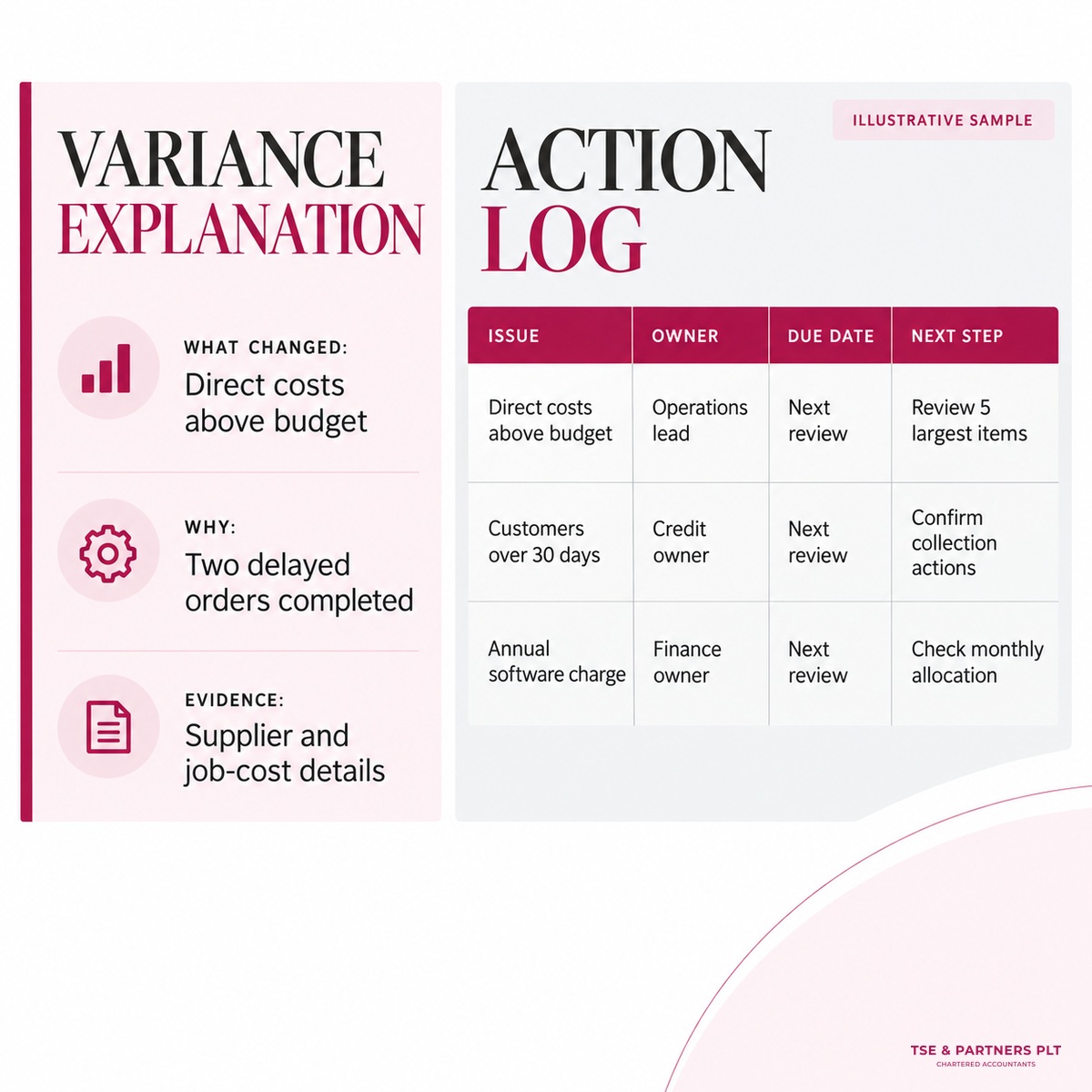
A variance is a difference from a comparison point. It is not an explanation by itself. A useful note explains what changed, why it changed, what evidence supports the explanation, and whether action is required.
For the sample above, management might record that 2 delayed orders increased revenue, direct costs moved with the extra work, and an annual software invoice increased operating costs. If the evidence is not ready, the reason should remain an open question rather than being guessed.
| Issue | Evidence needed | Owner | Next action |
|---|---|---|---|
| Direct costs above budget | Supplier and job-cost details | Operations lead | Review the 5 largest items |
| Customers over 30 days | Aged receivables list | Credit owner | Confirm collection actions |
| Annual software charge | Invoice and contract period | Finance owner | Check monthly allocation |
This action log turns a review of old figures into a plan for the next period.
Prioritise actions by value, timing, and risk. A small recurring error may deserve attention because it affects every month. A large one-off variance may need evidence but no process change. An overdue customer balance may need an immediate collection action because it affects cash, even when reported profit is on target.
Keep the commentary short and specific. Replace statements such as “costs increased” with an explanation that names the account, amount, cause, evidence, owner, and next step. If the cause is unknown, say that it is under review. Do not present an assumption as a confirmed explanation.
At the next meeting, carry forward only unresolved actions. Mark completed items with the completion date and evidence. This keeps the pack focused and shows whether management decisions were followed through.
Choose a Reporting Cadence That Fits
Monthly reporting can suit a business that needs regular cash, margin, receivables, or cost decisions. Quarterly reporting may suit a lower-volume business that can act on a wider interval. Agree the document cut-off, close date, accounts and entities included, comparisons, measures, review date, and correction process.
A practical reporting timetable may look like this:
| Stage | Example timing | Output |
|---|---|---|
| Document cut-off | First few working days | Complete document list and missing-item log |
| Record and reconcile | After cut-off | Updated ledgers and reconciliation files |
| Accounting review | After key balances agree | Supported adjustments and review questions |
| Report preparation | After review points are resolved | Draft management pack |
| Management meeting | Agreed review date | Decisions and action owners |
| Controlled correction | After the meeting | Updated report with a clear change record |
The exact dates should fit the business. Set them early enough for management to act while the information is still useful. If important records arrive late, show the limitation rather than hiding it behind an on-time report.
Keep the format stable from one period to the next. Stable tables and definitions make trends easier to see. Add a new measure only when management knows how it will use the result.
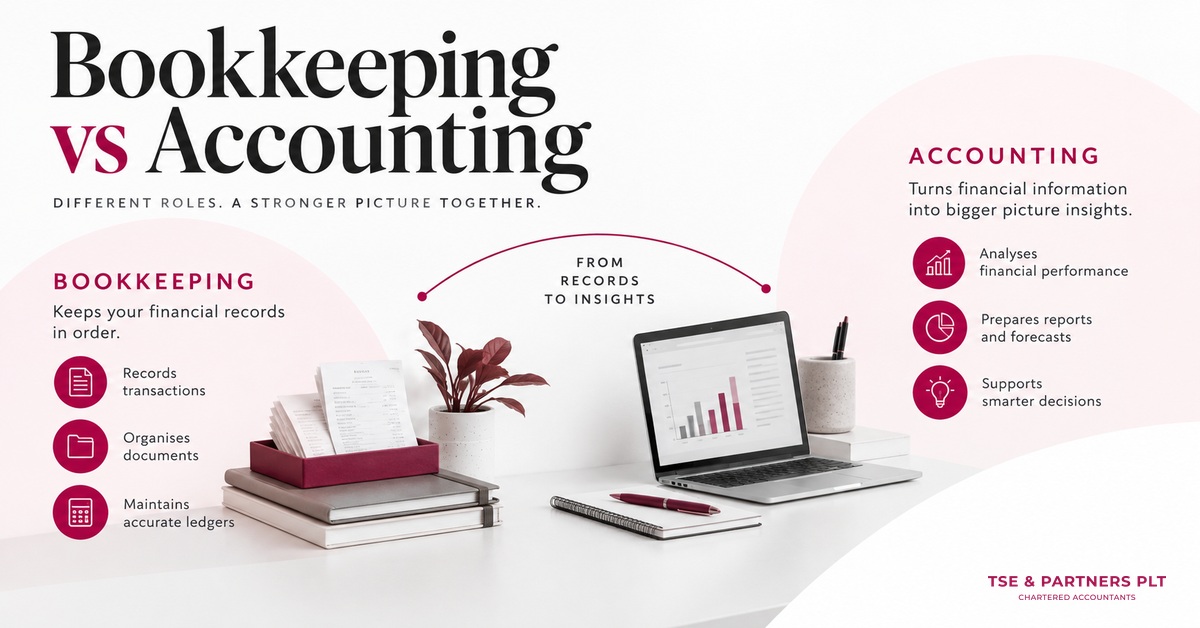
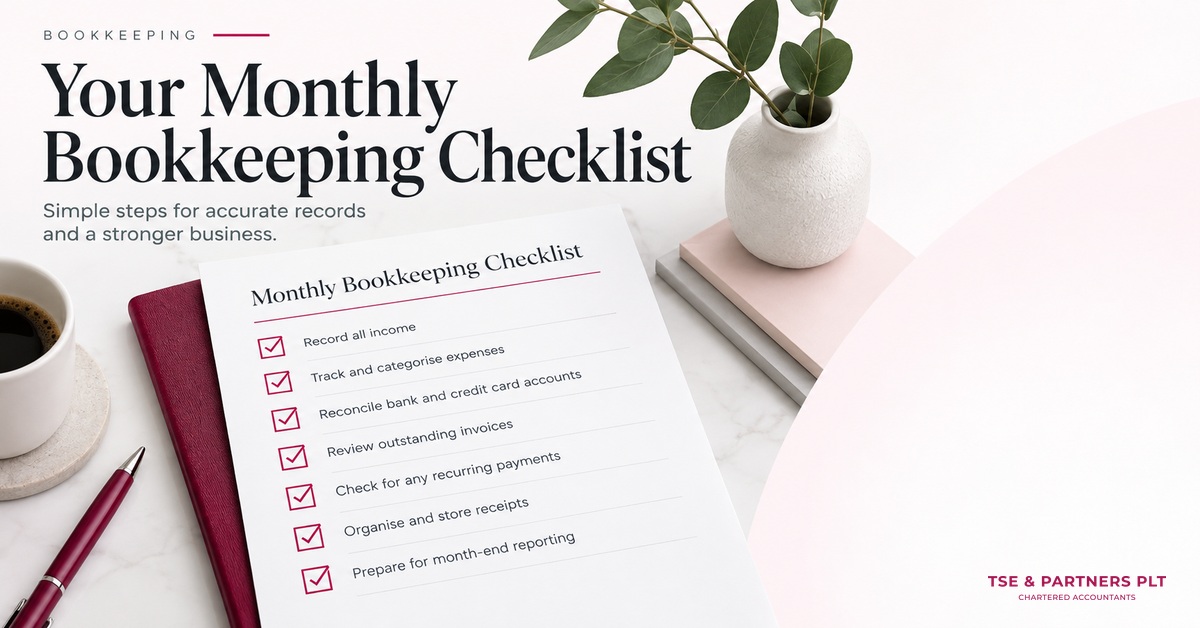
A dependable pack starts with dependable records. A monthly bookkeeping checklist can set the collection and close process. Understanding bookkeeping versus accounting also helps separate preparation from review and explanation.
Turn the Pack Into Business Decisions
Read the pack in this order:
Confirm the period, entities, and preparation basis.
Check whether key balances were reconciled.
Read the headline result and cash position.
Review the most important variances.
Check customer, supplier, stock, debt, or intercompany balances that matter.
Challenge explanations that lack evidence.
Record actions, owners, and dates.
Management accounts are internal reports. They are different from annual statutory statements and do not provide audit assurance. The guide to unaudited financial statements in Malaysia explains the separate preparation and audit boundaries.
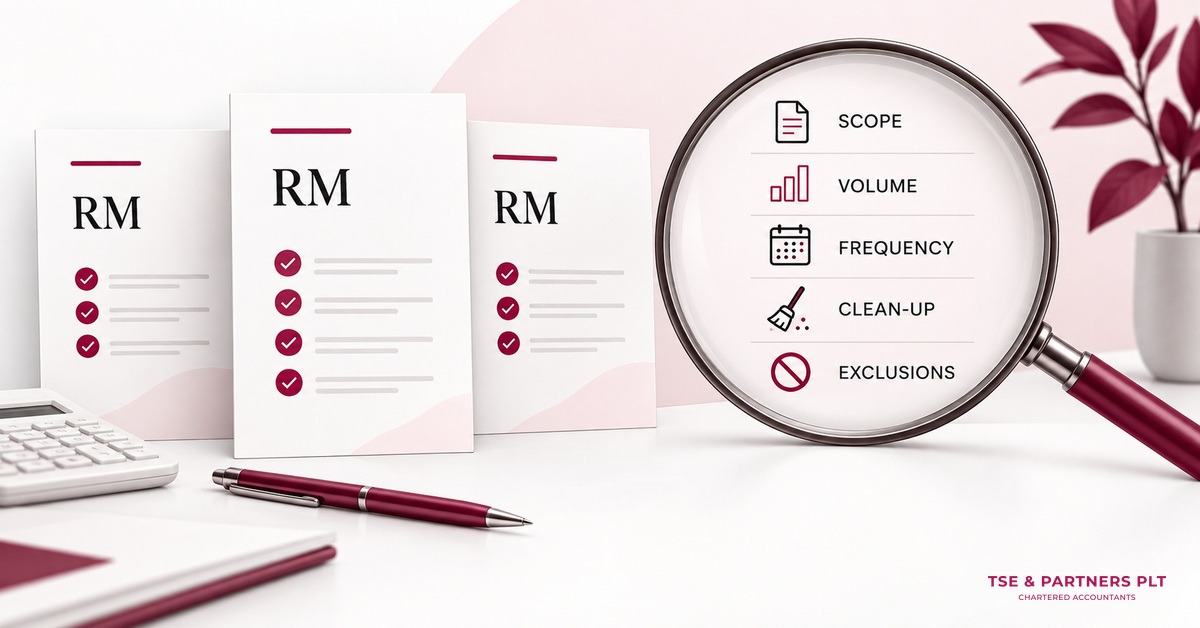
If you are comparing outside support, review how accounting service fees in Malaysia depend on cadence, entity count, record condition, and required outputs.
TSE & Partners supports accounting and bookkeeping services in Kuala Lumpur through associates. An agreed scope may cover recurring bookkeeping, accounting reports, financial statement compilation, or consolidation. Audit and assurance are outside this scope.
Management Account Questions SMEs Ask
Is there one standard management account template?
No. Keep a stable core, then tailor the measures, comparisons, commentary, and actions to the decisions your business needs to make.
How often should management accounts be prepared?
Choose a cadence that matches transaction volume and decision speed. Monthly packs suit regular decisions. A lower-volume business may choose quarterly reporting.
Should the pack include a cash-flow forecast?
It can, if forecasting is part of the agreed purpose and the assumptions are clear. A forecast is different from historical cash movement.
What if the records are incomplete?
Mark the affected figures and open items clearly. Complete the missing-record follow-up and reconciliation before relying on the pack for an important decision.
Are management accounts audited?
Not automatically. Internal management accounts do not provide an audit opinion. Any audit or assurance work requires a separate engagement and is outside TSE's current accounting scope.
Data Sources and References
Excel Skills management accounts template
Arts Council England management account templates
Fathom sample monthly management accounts
Malaysian SME management-accounting research
Malaysian Institute of Accountants SME cash-flow commentary
The information in this article is general guidance only. It does not constitute accounting, tax, financial or legal advice and may not fit your circumstances. Confirm the engagement scope and seek qualified advice before acting.