
Financial Statement Preparation Services
Turn complete accounting records into financial statements and supporting schedules for the period you need to report.
Prepared through associates for Malaysian SMEs, with the reporting framework, period and outputs agreed first. Directors retain responsibility for the statements. This is not an audit and provides no audit opinion.

When your business needs financial statements prepared
This service suits owners and directors of Malaysian companies in situations like these:
- Your financial year has closed. The books or trial balance are ready, and you need them turned into a set of financial statements for the year.
- Your directors need statements for a period. The statements may be for the directors' own use or for another authorised user.
- Your records are kept in-house or by a bookkeeper. Day-to-day recording is handled, but you need someone to take the finished records and prepare the statements.
- A bank, investor or other party has asked for financial statements. Ask them first what form of statements they need. Each institution sets its own requirements.
This is not the right starting point for every need. If you want routine monthly recording, start with our accounting and bookkeeping services in Kuala Lumpur. If periods are missing or unfinished, they need to be brought up to date first, which is the job of Catch-Up Bookkeeping & Accounts Clean-Up. If you need one set of figures across related companies, that is Consolidated Accounts work.
What is financial statement preparation, and is it an audit?
Financial statement preparation turns your company's records for a period into a set of financial statements under the applicable reporting framework. Your directors and management stay responsible for the records and the final statements. It is not an audit. Preparation gives no audit opinion and no assurance on the figures.
Unaudited statements can still be formal financial statements. If you are still sorting out where recording ends and accounting begins, read bookkeeping vs accounting.
From your records to the statement package
The associates work from records that already exist. The engagement sets out what they use, what you receive and what sits outside the work.
| Topic | What this means for your engagement |
|---|---|
| What you supply | Your trial balance or ledgers, bank statements and reconciliations, schedules for material balances, prior-year statements if any, and answers to open questions |
| What you receive | The financial statements and supporting schedules agreed with the associate, for the period ending on your reporting date and prepared under the applicable reporting framework |
| Who you deal with | The engagement names the associate doing the work, the reviewer and your customer-facing contact |
| Not included | Audit, review or any other assurance work. Deciding whether your company qualifies for audit exemption. Circulating, lodging or filing the statements, and company secretarial work. |
| Handled elsewhere | Rebuilding incomplete or missing records (Catch-Up Bookkeeping & Accounts Clean-Up). Group figures across related companies (Consolidated Accounts). |
Who is responsible for what in the engagement
- Your directors and management own the accounting records and the judgements behind them. They answer the associate's questions, and they review the final statements and decide whether to approve them.
- The associates prepare the agreed financial statements and supporting schedules from the records you supply. They raise questions where something is unclear or missing.
- Your named contact and reviewer help keep questions, proposed adjustments and the agreed outputs clear. The statements rely on the records and explanations your business provides; the scope above sets out the separate work this engagement does not cover.
The engagement also sets out how questions are answered and how any proposed adjustments are agreed before the statements are finalised.
How a financial statement preparation engagement runs
- STEP 01
Share the context
Tell us the company, the financial period, the reporting framework if you know it, and who will use the statements.
- STEP 02
Map the records
The associate looks at the trial balance, ledgers, reconciliations, schedules and open items. If periods are incomplete, they need attention before statements can be prepared.
- STEP 03
Agree the scope and outputs
The engagement sets the statements and schedules to be prepared, the reporting date, how records are shared, and who the associate, reviewer and contact will be.
- STEP 04
Prepare and review the statements
The associates prepare the agreed statements and raise any questions. You review the draft with your named contact before your directors consider the final version.
What affects the scope and fee
The fee depends on the work your records need, so there is no fixed public price for preparing financial statements.
| What the associate looks at | Why it matters |
|---|---|
| Condition and completeness of the records | Clean, reconciled records need less work than records with open questions |
| Number and length of periods | Each period needs its own statements and checks |
| Type of company and reporting framework | These shape what the statements must contain |
| Number and complexity of balances and adjustments | More items mean more schedules and more questions to settle |
| Schedules and outputs required | The agreed package sets the volume of work |
| Who will use the statements | The intended users shape what the package needs to show |
The associate can explain the scope and fee after reviewing your records.
Financial statement preparation questions SMEs ask
What is included in unaudited financial statements?
Common components include a balance sheet, income statement, cash flow statement, statement of changes in equity and notes. The applicable framework and company circumstances determine the package, so confirm which statements and supporting schedules are included in your engagement and what the intended reader needs. Preparation does not automatically include an audit report, filing or circulation.
Can I use the statements for a bank or financing application?
Check the lender's document requirements first and share them when you enquire. A lender may ask for particular periods, schedules or a separate audit or compilation report; those reports are not included in this preparation service. This preparation service does not guarantee that a lender will accept the package or approve financing.
What documents are financial statements prepared from?
Start with the trial balance or ledger, bank statements and reconciliations, prior-year statements and schedules for material balances. Tell the associate which records or explanations are still missing. The final checklist depends on the reporting period and framework.
How long does financial statement preparation take?
The timetable depends on the completeness of the records, the adjustments needed and how quickly open questions can be resolved. Tell the associate your required date and who needs the statements. A completion date should be agreed after the records have been reviewed.
What is the difference between audited and unaudited financial statements?
Audited financial statements are accompanied by an independent auditor’s opinion; unaudited statements do not carry that audit opinion. This preparation service provides no audit opinion or assurance, and any required audit is a separate engagement. Whether your company must obtain an audit is a separate legal question to confirm with your advisers.
Who will prepare financial statements?
The preparation service is delivered through associates. Your engagement should identify the preparer, reviewer and contact, along with the agreed records and outputs. Directors remain responsible for the statements.
What is the process of preparing financial statements?
First agree the reporting period, applicable framework and package required. The associate reviews the completeness of the records, prepares the agreed statements and schedules, and raises open queries for clarification. Preparation and review responsibilities, unresolved matters and the final package should be clear before the statements are approved.
How much does it cost to prepare financial statements?
It depends on your records and the package you need. The main factors are how complete the records are, how many periods are involved, the type of company and framework, and the number of balances, adjustments and schedules. We do not publish a fixed price. The associate explains the fee once they have seen your records.
What is the difference between financial statement preparation and compilation?
Neither is an audit. IFAC describes a compilation engagement under the international standard ISRS 4410 as one where a practitioner helps management prepare and present financial information. A practitioner's report then identifies the compiled information. IFAC also explains that a compilation engagement is not an assurance engagement. A compilation report is not included in this preparation service. If a bank or other party asks for one, clarify that separate requirement before agreeing the scope.
Can you prepare statements if our books are incomplete?
Statements can only be as complete as the records behind them. If transactions are missing or periods are unfinished, the records need to be brought up to date first. That is the job of Catch-Up Bookkeeping & Accounts Clean-Up. Not every gap can be closed, so the associate can confirm what the available records can support.
Do you prepare financial statements for a group of companies?
This page covers financial statements for one company. If you need one set of figures across a parent and its related companies, that is consolidated accounts work. Tell us about each company when you enquire, and the associate can explain how the work is scoped.
Is a management account the same as a financial statement?
Management accounts are internal reports that help owners make decisions during the year. Their format follows what the business needs to see. Financial statements are the formal record of a financial period, prepared under a reporting framework. A management account sample shows what an internal report can include.
Related accounting services from TSE & Partners
Accounting & Bookkeeping
Explore ongoing bookkeeping, full-set accounts and the right reporting support for your business.
Management Accounts & Reporting
Reports for an agreed period that help owners and directors make decisions between annual statements.
Consolidated Accounts
One view of the figures across related companies, for groups that need group reporting.
Catch-Up Bookkeeping & Accounts Clean-Up
Bring missing or unfinished periods back into a usable state before reports or statements are prepared.
Relevant articles on preparing financial statements
How to Read Financial Statements
How to read financial statements for your company: check the cover, see how the statements connect, use last year's figures and notes, and ask clear questions.

What to Check Before Signing Financial Statements
What to check before signing financial statements: match key figures to your own records, spot what needs a decision and ask your preparer clear questions.
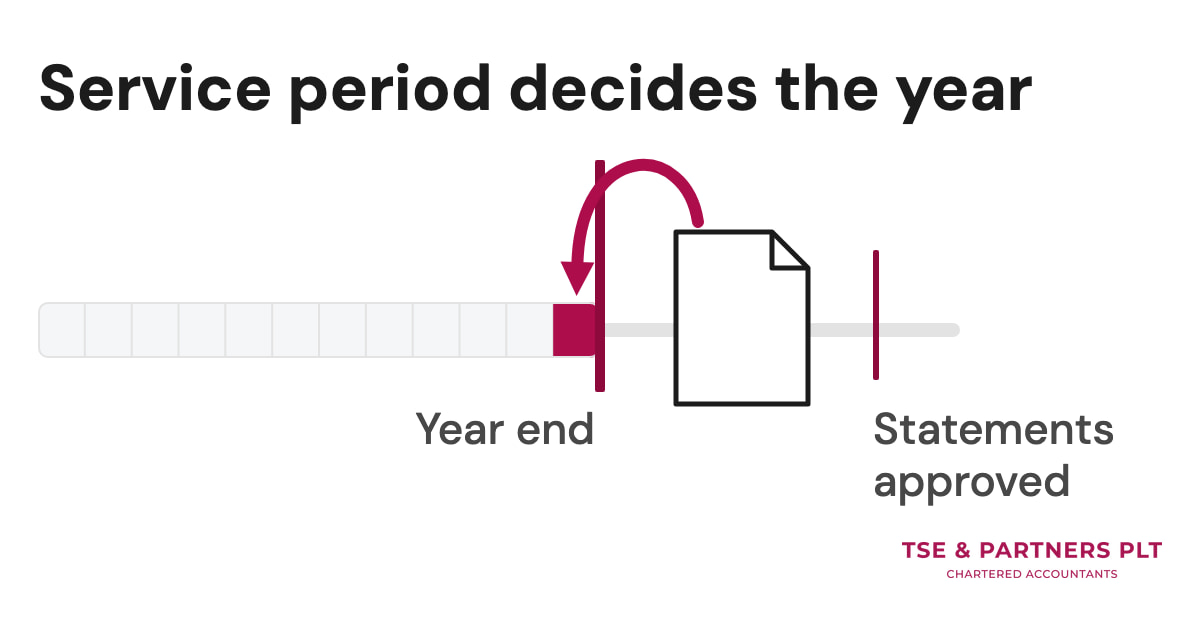
Invoices Received After Year End
Supplier invoice dated after your year end? See how Malaysian SMEs decide which year the cost belongs to and what changes once the statements are approved.
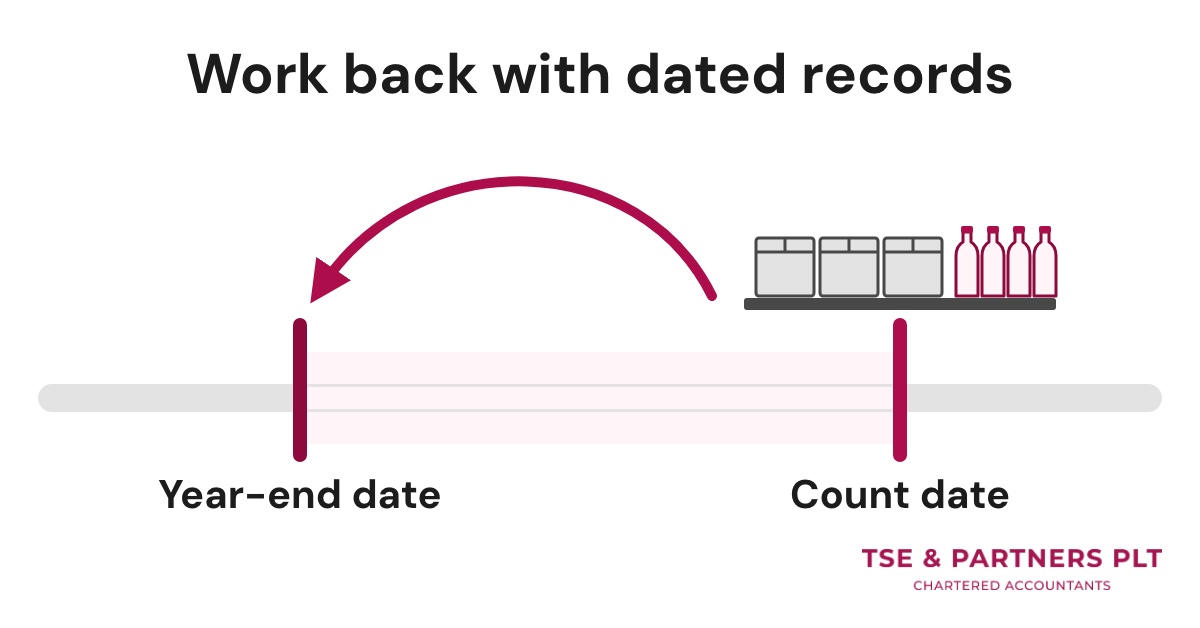
Stock Count After Year End
Counted stock after your year end? See how to work back to the year-end quantity with dated receipts and deliveries, and what to send your preparer.
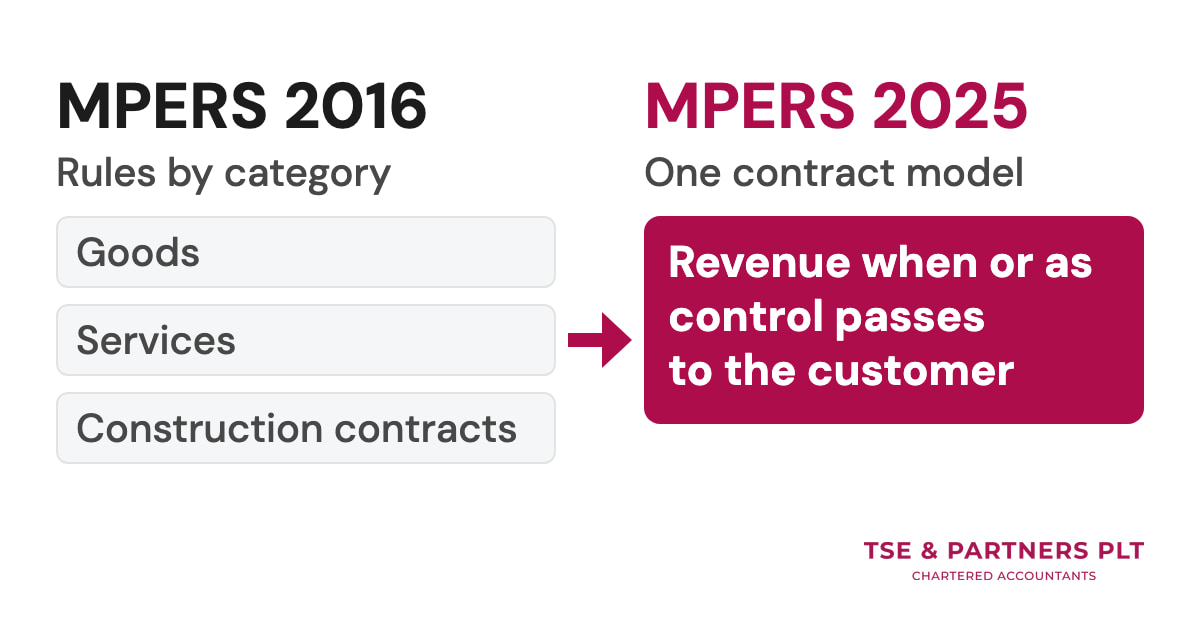
MPERS 2016 vs MPERS 2025 Revenue Recognition
MPERS 2016 vs MPERS 2025 for revenue: how the contract-based rules compare with the old ones, which contract features may change, and when MPERS 2025 applies.
What to prepare before you enquire
Gather what you can before you get in touch. It gives the associate a clearer picture of the work.
- Company name and type
- The financial period and reporting date
- The reporting framework, if you know it
- Trial balance or general ledger for the period
- Bank statements and bank reconciliations
- Last year's financial statements, if any
- Schedules that support material balances
- A list of open questions and records still missing
- Who will use the statements
What you need depends on your company and the period. Share only records you are authorised to share. If you keep the books yourself, the year-end section of our monthly bookkeeping checklist can help you organise the hand-off.
Discuss your financial statement preparation needs
Share the company name, the financial period and where your records stand. TSE & Partners PLT can then outline the work the associates would do and which records they need to see first.